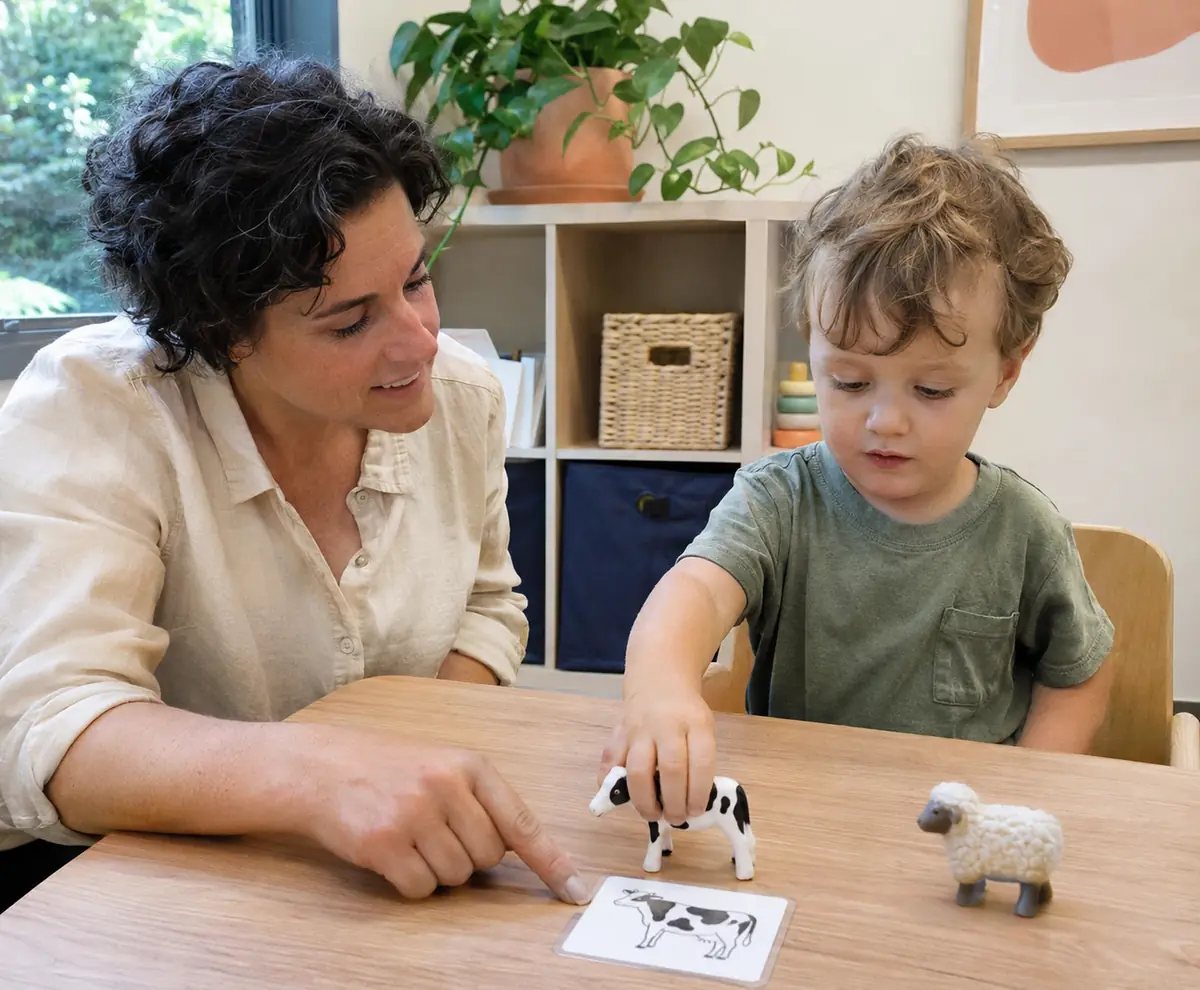
What the BCBA does

- Parent interview: your child's history, strengths, daily routines, what's hardest, and what you want to change first.
- Observation: watching your child play and go through routines, at home, in the clinic or both.
- Skills assessment: structured activities that measure communication, social, play, learning and self-care skills.
- Behavior assessment: if there are behaviors like aggression, self-injury or elopement, the BCBA looks at when they happen and why.
How to prepare
- Have your child's diagnosis report, any school IEP and other therapy reports ready.
- Write down your top three goals in everyday words, like "ask for help instead of crying" or "sit for dinner."
- Plan the visit for a time your child is usually at their best.
- Don't try to have your child "perform." Typical behavior gives the most useful picture.
After the assessment
The BCBA writes a treatment plan with measurable goals, how progress will be tracked, recommended weekly hours, and your role in parent training. Ask questions about anything that doesn't match your priorities; the plan should reflect your family. Your provider then submits it to insurance.
The tools a BCBA may use
There is no single ABA test. Your BCBA chooses tools that fit your child's age and needs, and usually combines several:
- Skills assessments that measure communication, play, social, self-care and learning-readiness skills against developmental milestones.
- Adaptive behavior measures, often a parent interview or questionnaire about everyday skills at home and in the community.
- A functional behavior assessment when there is challenging behavior. The BCBA looks at what happens before and after the behavior to understand what it is doing for your child.
- Direct observation during play, routines and transitions.
Your role as a parent
You know your child better than anyone, and the assessment is better when you are part of it. Be ready to talk about:
- What your child does well and enjoys
- What a typical day looks like, including the hardest parts
- How your child communicates wants, needs and pain
- Any safety concerns, such as running off or climbing
- Goals that would make the biggest difference to your family
If something happens at home that may not happen during the visit, such as a hard bedtime, a short phone video can help the BCBA understand it.
What the treatment plan should include
After the assessment, the BCBA writes a treatment plan. A good plan is something you can read and understand. Look for:
- A summary of your child's strengths and needs
- Specific, measurable goals, each with a starting point
- How each goal will be taught and how progress will be measured
- Recommended hours per week, with the reason for that number
- Parent training goals
- A plan for working with other providers or school, with your permission
Ask questions about anything you don't understand, and say so if a goal doesn't feel important to your family. Goals should reflect your priorities.
Reassessments
Assessment isn't a one-time event. The BCBA re-measures progress at set intervals, often when the authorization is renewed, and updates the goals. These reassessments are also how insurance decides whether to keep approving therapy.
A sample assessment day
Every BCBA works a little differently, but a first in-person visit often looks like this:
- Getting comfortable. The BCBA plays with your child and lets them warm up.
- Structured activities. Short tasks to see which skills your child already has, mixed with breaks and play.
- Watching a routine. Snack, cleanup or a transition between activities.
- Parent interview. Questions about history, daily life, concerns and goals.
- Next steps. The BCBA explains what happens next and when you'll see the plan.
Parts of the assessment may happen over more than one visit, especially for young children who tire quickly.
After the plan is written
Ask for a meeting to go over the plan before it's sent to insurance, if possible. It's your chance to make sure the goals reflect your family's priorities and that the hours fit your life.
What to bring
- The diagnosis report and any testing results
- Your child's current IEP or IFSP, if they have one
- Speech, occupational therapy or other therapy reports
- A list of medications and medical conditions
- Your child's favorite snacks and toys
- A short list of your top three priorities
Related guides
Sources
- Georgia Medicaid: Autism Spectrum Disorder services
- CASP: ABA Practice Guidelines for the Treatment of ASD, Version 3 (2024)
- Behavior Analyst Certification Board
- Autism Speaks ATN/AIR-P tool kits for families
Next step
Talk with our intake team
Tell us your child's age, your ZIP code and your insurance. We'll check your benefits, confirm availability for your address and explain next steps, with no obligation.
Common questions
How long does an ABA assessment take?
It is usually spread over more than one visit, totaling several hours, so your child isn't overwhelmed. Your BCBA will tell you the plan for your child.
Do I have to be there for the assessment?
Yes, a parent or caregiver should be present. Your input is a key part of it.
Does insurance cover the assessment?
Usually yes, with prior authorization. Georgia Medicaid requires approval for the assessment before it happens.
What is a functional behavior assessment?
A process the BCBA uses to understand why a challenging behavior happens, by looking at what comes before and after it. The results guide a plan to teach safer ways for your child to get the same needs met.