Why families choose in-home ABA
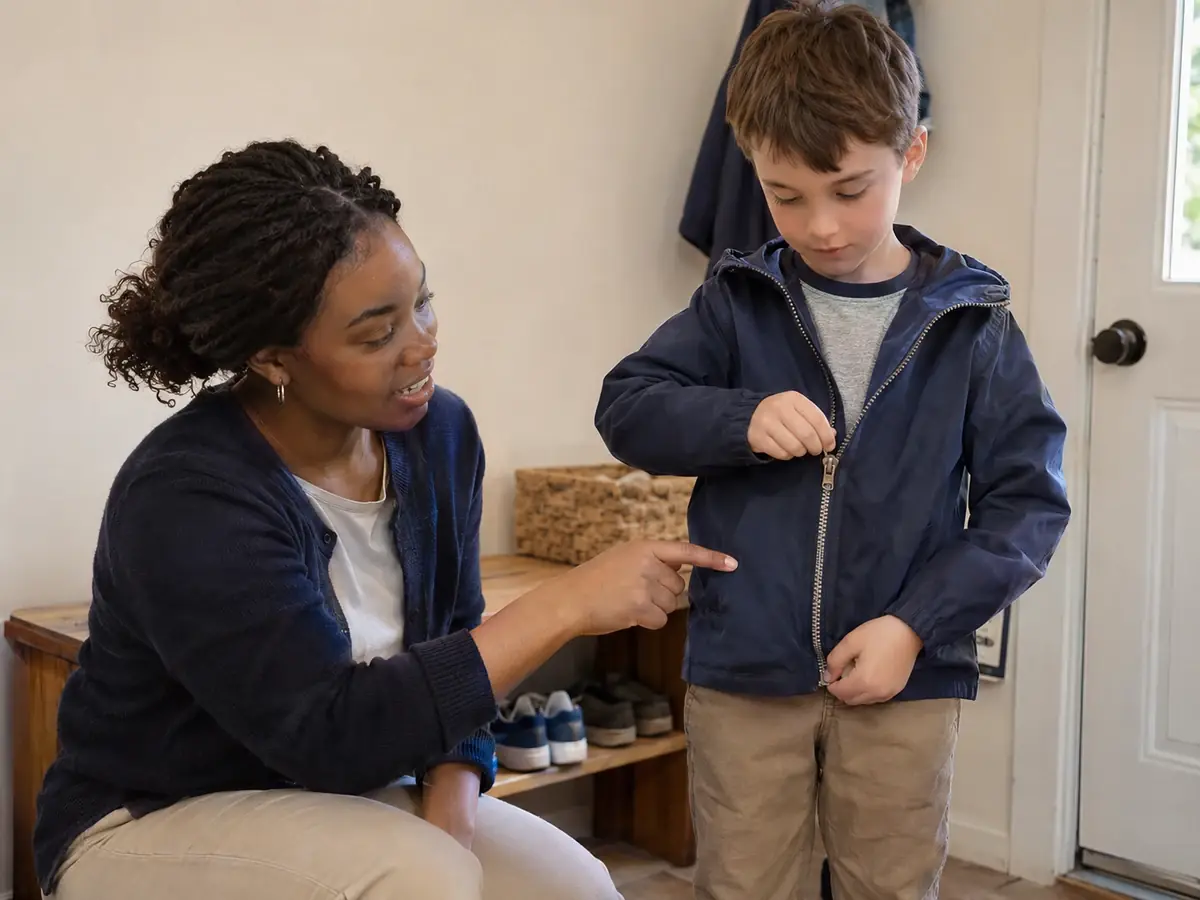
- Skills are taught where they will be used: mealtimes, play, getting dressed, bedtime.
- No driving to a center, which matters for families with siblings or long distances.
- Parents and caregivers can watch and practice alongside the therapist.
What sessions look like
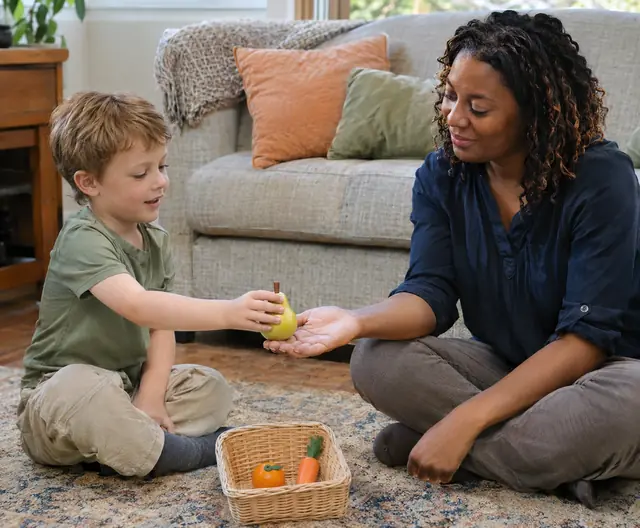
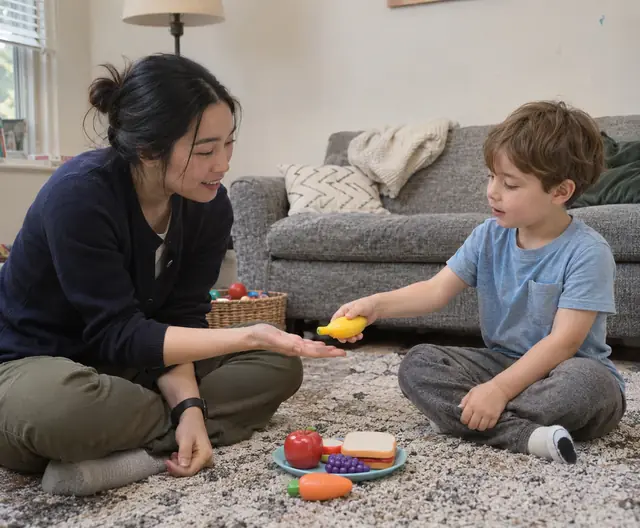
Sessions mix play-based teaching with structured practice. Your RBT records data on every goal, and your BCBA reviews it, visits sessions and updates the plan as your child progresses.
Where it's available
Across Georgia, Maryland and North Carolina. We confirm availability for your address during intake.
What a session looks like, from arrival to wrap-up
Your child's Registered Behavior Technician (RBT) arrives at the scheduled time and starts with a few minutes of play, so your child settles in and connects the visit with things they enjoy. Then the teaching begins. Some goals are practiced in short, structured turns at a table or on the floor. Others are worked into real moments: asking for a snack, washing hands, putting on shoes, taking turns with a sibling.
The RBT records data on each goal as it happens. Near the end, they wrap up with an activity your child likes and give you a short summary of how the session went and anything worth practicing before the next visit.
What space you need
An ordinary living room, a corner of a bedroom or a kitchen table is fine. What matters is a safe area with few distractions. Before sessions, put away anything unsafe or very distracting, and if you can, set aside a small spot to keep therapy materials. Your team brings the teaching materials and will suggest anything else that would help.
Your part as a caregiver
An adult age 18 or older stays home for the whole session. You don't have to sit in on every minute, but watching and joining in for parts of it is one of the fastest ways to learn what works. Siblings can sometimes take part, too, which gives your child real practice with turn-taking and play. Your BCBA also meets with you for parent training, so the same strategies carry on between visits.
How BCBA supervision works
A Board Certified Behavior Analyst (BCBA) designs your child's program and is responsible for it. The BCBA reviews the data your RBT collects, joins sessions to observe and coach, changes teaching steps that aren't working, and writes the progress reports your insurance needs. The Behavior Analyst Certification Board requires that at least 5 percent of an RBT's service hours each month are supervised, with at least two face-to-face contacts a month. Many programs supervise more than the minimum. See BCBA vs RBT: who does what.
How scheduling works
Sessions are usually set in blocks of two to four hours, depending on your child's age and attention span, on a regular weekly schedule. Your BCBA recommends the number of weekly hours after the assessment, and your insurance approves them. Getting approval and finding staff for your times are separate steps. After-school hours fill first, so families who can offer morning or midday times often start sooner. We'll tell you honestly what's open near your address.
Who in-home ABA tends to suit
- Children whose main goals are home routines: meals, dressing, bedtime, toileting
- Very young children who are calmer in a familiar place
- Children who find car rides or new places very hard
- Families who live far from a clinic or have other young children at home
In-home or clinic days?
Neither setting is better for every child. Home is where daily routines happen; a clinic adds structure and other children to practice with. In Georgia, families within reach of ABA Journey's Stockbridge clinic can combine the two under one treatment plan. In Maryland and North Carolina, therapy is in-home. Compare both in In-home vs clinic ABA: how to choose.
Next step
Talk with our intake team
Tell us your child's age, your ZIP code and your insurance. We'll check your benefits, confirm availability for your address and explain next steps, with no obligation.
Common questions
What do I need to have at home for in-home ABA?
A safe, reasonably quiet space and a caregiver age 18 or older present during sessions. Your team brings materials and will suggest anything else that helps.
Can in-home ABA be combined with clinic sessions?
Yes. Families within reach of Stockbridge often combine clinic days with in-home sessions.
How long is an in-home ABA session?
Sessions are usually scheduled in blocks of two to four hours, depending on your child's age and attention span. Your BCBA recommends weekly hours after the assessment, and your insurance approves them.